
Fairhaven Lake and Gardens
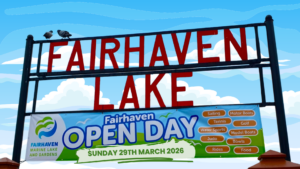
Fairhaven Lake and Marine Gardens is located on the Fylde coast midway between Lytham and St Annes on the Sea. Offering stunning views over the Ribble Estuary, it’s a popular destination with boat rides, adventure golf, water sports, tennis, bowls, school visits, events, and so much more…

Investing into Fairhaven Lake
In December 2018 Fylde Council received a confirmed National Lottery grant of £1.476 million for the Fairhaven Lake and Garden Restoration project .
Thanks to money raised by National Lottery players, the project can now fulfil its ambition to make Fairhaven Lake and Gardens one of the finest marine lakes in the country! Supported through the Heritage Lottery Fund (HLF) and Big Lottery Fund, the project aims to conserve and restore Fairhaven’s heritage buildings and landscape, improve the lake’s infrastructure and water quality, and provide an exciting programme of events.
The Park
Fairhaven Lake is considered to be the third oldest marine lake in Britain first conceived by Thomas Riley, a Fleetwood businessman. Riley, aware of the development of St Annes, seized the opportunity to propose, plan and then develop the marine resort of Fairhaven.
Architect Arthur Carter was commissioned to produce a ‘master plan’ for the new resort, in 1893. The new resort was envisaged as being a genteel “watering place” – offering the virtues of spaciousness, clean air and community facilities, including a hotel, recreational provision and affording extensive views of the sea over the estuary.
Riley’s architect, Thomas Crook, created a dramatic impression of the new resort of Fairhaven, which envisages the lake and marine drive as being a major focus for the development. The creation of the lake was a fundamental part of the development of the resort and utilised the natural features of the estuary to create it.
This included the extensive shingle bank known locally as a ‘stannah’ which naturally enclosed a tidal lagoon. The aim was one of extending the stannah to provide a completely enclosed lake. This became the outer sea wall and Promenade.
Fairhaven is considered to be the third oldest marine lake in Britain, designed as a centrepiece of a resort with its recreational facilities including a golf course. The present café was originally the golf course club house. The original lake was half the size of the present one and followed the natural contours of the site.
The site also included some notable buildings, such as the original boat house, known as the Pagoda building – dating from 1901 and the large boat house, designed by way of an unusual prefabricated system, dating from 1921. The original boat house was designed by William Wade, an eminent St Annes architect.
Well-known to readers is the fact the former two urban districts of Lytham and St Annes were merged in November 1922, and to illustrate its forward-looking ambitions, the new local authority purchased the whole site from the Fairhaven Estate.
A price of £34,000 had been agreed and at this point, the generosity of Lord Ashton (having already provided funding for the purchase and upgrading of what was to become Ashton Gardens, in St Annes) enters the story. He generously donated the £34,000 for the Corporation to purchase the whole site.
The ambitions to enhance this newly acquired recreational facility led to the commissioning of Thomas Mawsons and Sons, who had an international reputation for high quality landscape and town planning design. Their scheme was presented in 1924 and included ambitions plans to extend the Promenade Gardens, as well as the lake and its immediate environment.
The lake was doubled in size in a picturesque format, with bays and inlets and featuring extensive landscaping, plantations and a re-plan of the recreational facilities. The ambitious plan was fulfilled and the lake as it now appears follows the Mawson Plan.
An interesting feature of the Mawson Plan was the proposal and implementation of the Japanese garden/lagoon, situated on the south-westerly side of the lake. The Japanese garden was covered over in the 1960’s where it remained hidden until the Fairhaven HLF project expertly uncovered the garden and made repairs to restore the area to its former glory.
The HLF project also transformed the Pagoda building, into the home of the RSPB wildlife charity alongside a new visitor centre which depicts the history of the lake across an interactive timeline.
The large boathouse has benefited from an internal redesign to become Fairhaven’s brand-new Water Sports building to increase usage of the lake for a number of water related activities and support existing clubs and societies on the lake.
The dated café building has been comprehensively rebuilt back to its former grandeur externally and redesigned into a vibrant modern café inside.
For more information on the Park and its history head to our visitor centre in the pagoda building, tour the park and learn from our various information boards or download our app!